Design Principle
Design principles provide high level guidelines to design better software applications. They do not provide implementation guidelines and are not bound to any programming language. The SOLID (SRP, OCP, LSP, ISP, DIP) principles are one of the most popular sets of design principles.
For example, the Single Responsibility Principle (SRP) suggests that a class should have only one reason to change. This is a high-level statement which we can keep in mind while designing or creating classes for our application. SRP does not provide specific implementation steps but it's up to you how you implement SRP in your application.
Design Pattern
Design Pattern provides low-level solutions related to implementation, of commonly occurring object-oriented problems. In other words, design pattern suggests a specific implementation for the specific object-oriented programming problem. For example, if you want to create a class that can only have one object at a time, then you can use the Singleton design pattern which suggests the best way to create a class that can only have one object.
Design patterns are tested by others and are safe to follow, e.g. Gang of Four patterns: Abstract Factory, Factory, Singleton, Command, etc.
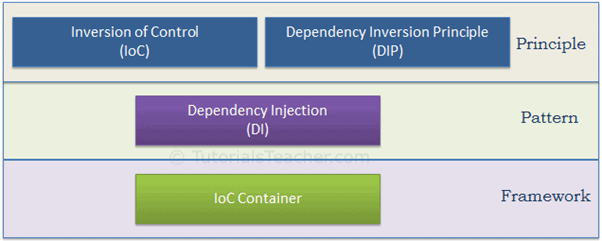
Design principles provide high level guidelines to design better software applications. They do not provide implementation guidelines and are not bound to any programming language. The SOLID (SRP, OCP, LSP, ISP, DIP) principles are one of the most popular sets of design principles.
For example, the Single Responsibility Principle (SRP) suggests that a class should have only one reason to change. This is a high-level statement which we can keep in mind while designing or creating classes for our application. SRP does not provide specific implementation steps but it's up to you how you implement SRP in your application.
Design Pattern
Design Pattern provides low-level solutions related to implementation, of commonly occurring object-oriented problems. In other words, design pattern suggests a specific implementation for the specific object-oriented programming problem. For example, if you want to create a class that can only have one object at a time, then you can use the Singleton design pattern which suggests the best way to create a class that can only have one object.
Design patterns are tested by others and are safe to follow, e.g. Gang of Four patterns: Abstract Factory, Factory, Singleton, Command, etc.
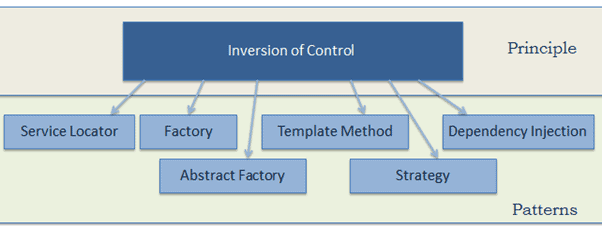
The following pattern (but not limited) implements the IoC principle.

